
Equity Implementation
Across education, equity is often named as a central value and strategic priority. Districts develop plans, initiatives, and commitments intended to create more just, responsive, and supportive learning environments for all students.
Yet equity implementation can be challenging in practice. Even when the vision is clear, translating that vision into consistent day-to-day decisions, instructional practices, support structures, and student experiences requires more than strong language alone. It requires coherent implementation across the system.
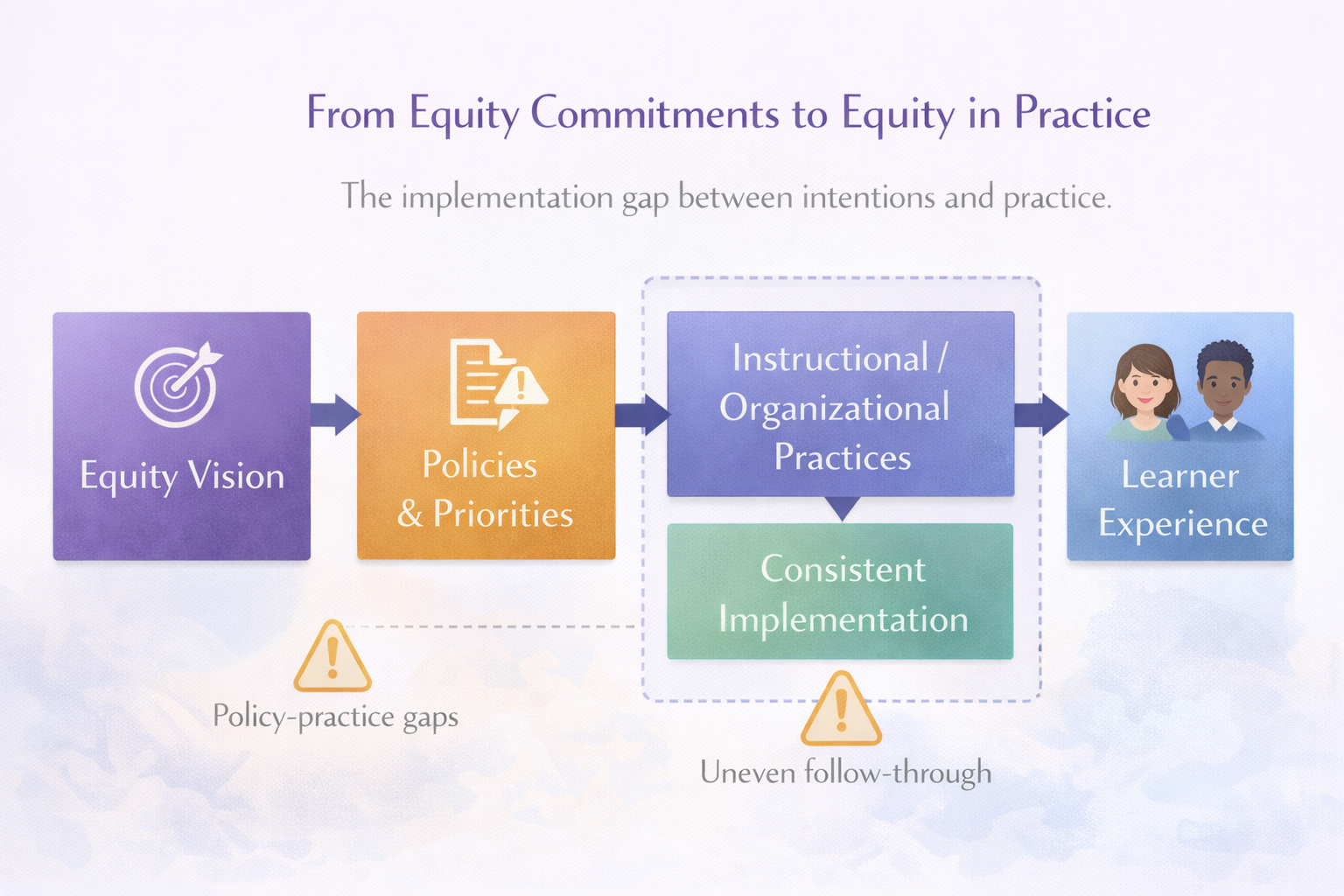
Equity becomes meaningful when commitments are translated into consistent practice, system design, and lived student experience.
Where Implementation Breaks Down
In many systems, equity work is strongest at the level of aspiration and less consistent at the level of implementation. Districts may articulate important commitments, but those commitments can weaken as they move into planning, professional learning, instructional practice, intervention systems, and daily decision-making.
This does not necessarily reflect a lack of care or effort. More often, it reflects the complexity of system change. Equity implementation requires alignment across leadership, instructional support, data use, resource decisions, and the routines that shape how students actually experience school.
Why It Matters
When equity remains primarily at the level of vision, the experience of students and educators may change unevenly or not at all. Schools may adopt the language of equity while still struggling to build consistent conditions that support meaningful access, opportunity, participation, and growth.
By contrast, when equity commitments are supported through coherent implementation, they become more visible in practice. Systems begin to make more intentional decisions about instruction, support, access, communication, and improvement.
What Supports Stronger Equity Implementation
Clear System Alignment
Equity work becomes stronger when commitments are reflected in strategy, leadership decisions, instructional priorities, and support structures across the organization.
Consistent Practice
Progress depends on whether priorities are translated into everyday routines, classroom experiences, and organizational decisions rather than remaining abstract goals.
Thoughtful Use of Evidence
Districts need meaningful data and reflection processes that help them examine whether students are experiencing the intended conditions and supports.
Sustained Learning and Support
Equity implementation requires ongoing professional learning, leadership attention, and refinement over time rather than one-time initiatives.
From Commitment to Coherent Action
Strengthening equity implementation is not simply about adding a new program or initiative. It involves building systems that help commitments remain visible in practice, across decisions, and over time.
From a systems perspective, equity work becomes more effective when it is treated as an ongoing process of alignment, implementation, evidence, and refinement. That is how values move from statements into lived organizational reality.
Explore Solutions: See How These Challenges Can Be Addressed →
Work With Us
We work with districts and organizations seeking thoughtful, research-informed approaches to implementation, improvement, and system coherence.
Explore Solutions: See How These Challenges Can Be Addressed →
Copyright © 2026 · All Rights Reserved · Limitless Learning Solutions