Data Systems in Schools
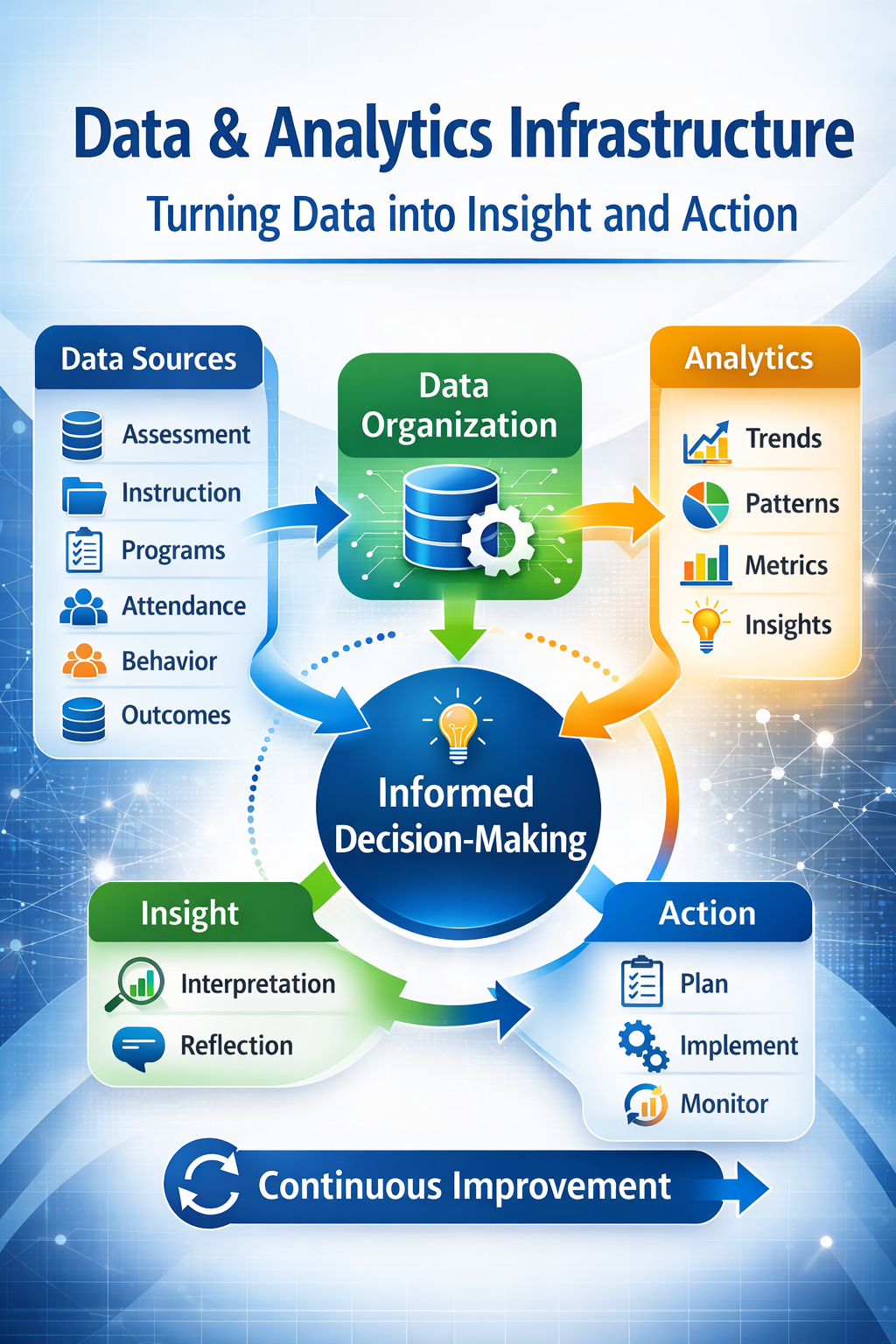
Data systems in schools are most useful when organizations can move from information collection to meaningful interpretation and action. Many organizations already have access to substantial data, but the systems needed to organize, connect, and use that information effectively are often underdeveloped or fragmented.
Limitless Learning Solutions helps organizations strengthen data systems by designing structures that support clearer decision-making, stronger implementation monitoring, and more coherent improvement efforts. Our approach integrates systems thinking, measurement design, and practical analytics to build data systems that are useful, sustainable, and aligned to organizational goals.
This work supports districts, schools, and educational organizations seeking to improve visibility into implementation, strengthen reporting systems, and make better use of evidence for instructional and organizational decision-making over time.
Why Data Systems Matter
Organizations often face challenges not because data is unavailable, but because it is difficult to organize, interpret, and connect to action. When data systems in schools are fragmented or overly complex, leaders and teams may struggle to see patterns, monitor progress, or use evidence consistently.
When data systems are intentionally designed, organizations are better positioned to connect information across systems, generate useful insights, and support more timely and informed decision-making.
Data systems support from Limitless Learning Solutions is designed to strengthen data visibility, improve system coherence, support practical reporting structures, and help organizations translate evidence into meaningful action across instruction, implementation, and improvement efforts.
Data Systems Support
Data systems engagements may include a range of supports depending on organizational needs.
Data System Design
Support organizing data structures, reporting processes, and information flows so evidence is easier to access, interpret, and connect to strategic priorities.
Dashboard and Reporting Support
Development of reporting tools and visual structures that help leaders and teams monitor implementation, progress, outcomes, and decision-making needs more clearly.
Measurement Alignment
Guidance ensuring data collection and reporting systems are aligned to instructional goals, evaluation questions, implementation evidence, and decision-making needs.
Insight-to-Action Structures
Creation of processes that help organizations move beyond data collection toward interpretation, reflection, instructional response, and informed next steps.
Who This Work Supports
Data systems support is particularly valuable for organizations that are strengthening reporting systems, improving visibility into implementation or outcomes, aligning data structures to strategic priorities, or building more coherent systems for evidence-informed decision-making.
This work is designed to complement existing data, research, and improvement efforts while helping organizations build systems that are practical, aligned, and sustainable.
This may include districts improving reporting structures, organizations monitoring implementation initiatives, schools refining instructional data use, or leadership teams seeking stronger visibility into progress, outcomes, and organizational decision-making.
Connecting Data Systems to Better Decisions
Data systems in schools are most effective when they do more than store information. They should help organizations see patterns, ask better questions, and make more informed decisions about learning, implementation, and improvement.
Limitless Learning Solutions integrates insights from measurement, cognition, and organizational learning to help organizations design data systems that support practical use rather than passive accumulation.
This approach helps data systems function not as disconnected reporting tools, but as coordinated organizational structures that connect evidence, implementation, instructional improvement, evaluation, and decision-making into a more coherent improvement process.
Related Work and Organizational Improvement
Strong data systems are closely connected to instructional systems, program evaluation, organizational learning, and implementation support. Explore related work examining how evidence-informed systems help organizations improve decision-making, monitor implementation, and support continuous improvement.
Program Evaluation
Explore how evaluation systems support implementation monitoring, evidence collection, and organizational improvement efforts.
Instructional Systems
Learn how instructional systems alignment supports clearer implementation, stronger coherence, and better organizational outcomes.
Case Studies
Review examples of systems-focused organizational improvement, implementation support, and evidence-informed consulting work.
Schedule a Conversation
Better organizational decisions become more sustainable when evidence, implementation, reporting systems, and instructional priorities are connected within a coherent data system.
Copyright © 2026 · All Rights Reserved · Limitless Learning Solutions