Data Overload in Schools
Over the past decade, schools have gained access to more data than ever before. Assessment platforms, learning management systems, benchmark tests, attendance systems, and survey tools all generate large volumes of information about student learning and school performance.
While this information has the potential to support better decision making, many districts face a different challenge: the sheer volume of data can make it difficult to determine what matters most. Leaders and educators may find themselves navigating multiple dashboards, reports, and metrics without a clear path toward meaningful action.
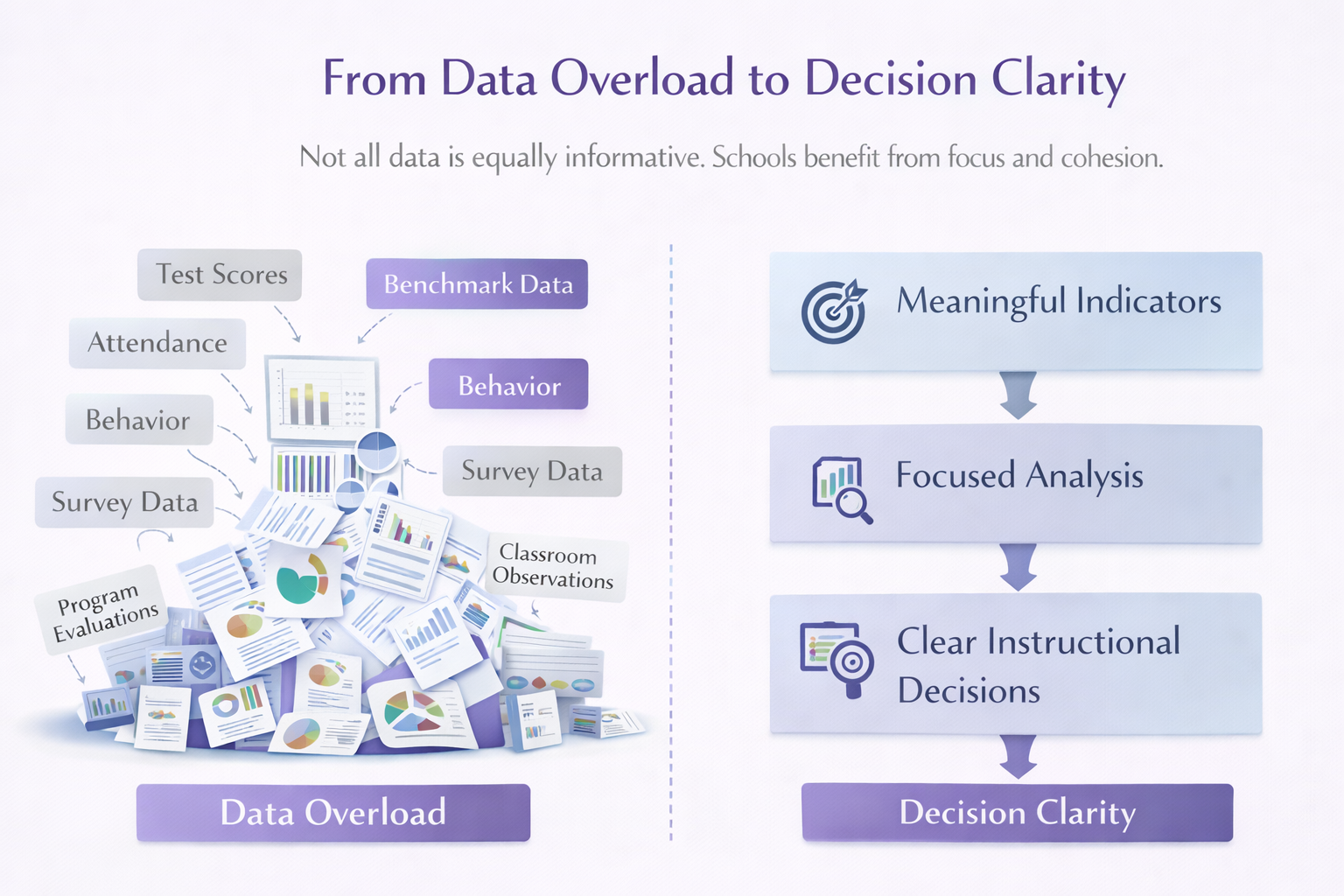
More data does not automatically lead to better decisions. The key challenge is identifying which information truly supports learning and improvement.
The Challenge of Too Much Information
Educators today are expected to monitor numerous indicators, including standardized test results, benchmark assessments, attendance patterns, behavioral data, intervention outcomes, and classroom observations. Each source offers a different perspective on student learning.
However, when these data sources remain disconnected or overly complex, they can overwhelm the very people responsible for using them. Instead of supporting instructional decisions, data systems may create confusion or competing interpretations of what is happening in classrooms.
Why It Matters
When data systems become overly complex, schools risk spending more time collecting and reporting information than interpreting it. Teachers and leaders may struggle to translate large datasets into practical instructional insights.
By contrast, when data is organized around meaningful questions about student thinking and learning, it becomes a powerful tool for improvement. The goal is not simply to gather more information, but to focus on the indicators that truly guide better decisions.
What Helps Schools Move Toward Clarity
Focused Indicators
Schools benefit from identifying a smaller set of meaningful measures that align directly with learning goals and instructional priorities.
Integrated Systems
When information from multiple sources is organized into coherent systems, educators can interpret patterns more easily.
Interpretation Support
Teachers and leaders often need structures that help translate raw data into insights about student thinking and instructional practice.
Action-Oriented Analysis
Data becomes most valuable when it directly informs decisions about teaching, intervention, and learning design.
From Data Collection to Insight
Improving data use in schools is not simply about adding new dashboards or reports. Instead, it involves designing systems that help educators interpret evidence about learning and translate that evidence into meaningful action.
When data systems focus on clarity rather than volume, they can support more informed decisions and stronger instructional outcomes.
Work With Us
We work with districts seeking clearer systems for interpreting learning data and supporting better instructional decisions.
Next Challenge: Leadership Capacity →
Copyright © 2026 · All Rights Reserved · Limitless Learning Solutions