
PLC Effectiveness
Professional Learning Communities (PLCs) are widely used across districts as a structure for collaboration, reflection, and instructional improvement. In principle, PLCs create space for educators to examine practice, analyze evidence, and work together to strengthen learning outcomes.
In practice, however, PLC effectiveness varies widely. Some teams engage in deep instructional inquiry and shared problem solving, while others spend most of their time on logistics, updates, or surface-level discussion of student data. The difference often lies not in commitment, but in how collaboration is structured and supported.
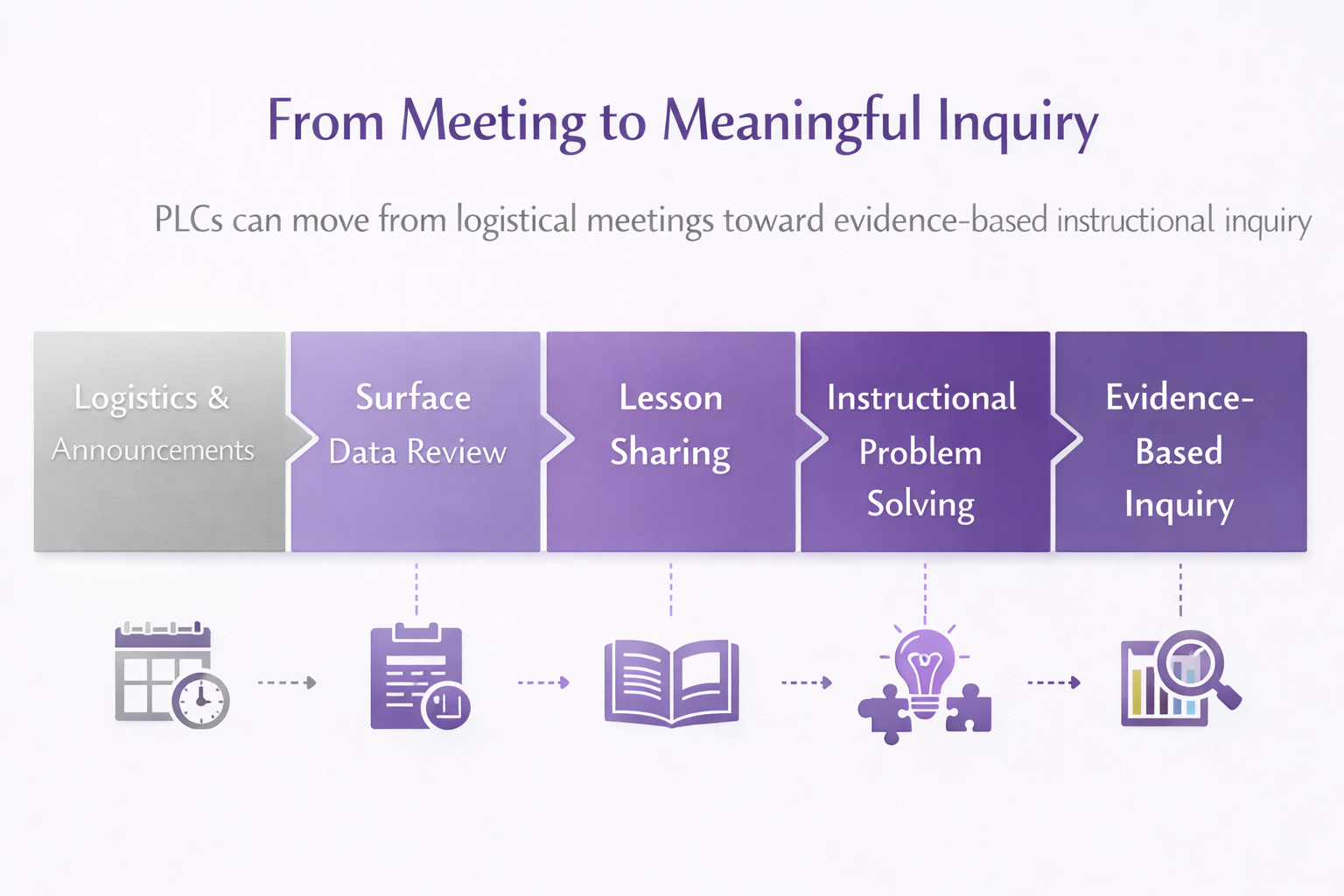
Effective PLCs move beyond coordination and toward collaborative inquiry focused on teaching, learning, and student thinking.
What the Challenge Looks Like
In many schools, PLC time is protected but not always fully leveraged. Meetings may focus on announcements, scheduling questions, or general discussion rather than the deeper instructional work they were intended to support.
Even when student data is discussed, conversations may remain descriptive rather than analytical. Teams review results but struggle to connect those results to instructional decisions, shared experimentation, or changes in classroom practice.
Why It Matters
When PLCs function primarily as coordination meetings, their potential impact on learning is limited. Educators may still value the time together, but the opportunity to engage in collective problem solving around teaching and learning remains underdeveloped.
Effective PLCs can become powerful engines of instructional improvement. They create conditions where teachers examine student thinking, test strategies, learn from one another, and refine practice through shared evidence.
Conditions That Support Strong PLCs
Clear Focus
Teams benefit from shared clarity about the instructional questions they are trying to answer and the learning goals guiding their work.
Structured Inquiry
Protocols and routines can help teams move beyond conversation toward disciplined examination of practice and student evidence.
Shared Responsibility
Strong PLCs treat improvement as a collective effort rather than an individual task carried out in isolation.
Meaningful Evidence
Data becomes most useful when it helps teams see patterns in student thinking and connect instructional decisions to outcomes.
Moving Toward Collaborative Inquiry
Improving PLC effectiveness is rarely about adding more meetings. Instead, it involves strengthening the structures, questions, and supports that shape how teams use the time they already have.
When PLCs focus on instructional questions, shared experimentation, and evidence of student learning, they can become one of the most powerful levers for sustained improvement within a school system.
Work With Us
We work with districts and schools seeking stronger structures for collaborative inquiry, professional learning, and instructional improvement.
Schedule a Conversation |
Explore Professional Learning Systems
Next Challenge: Professional Development Transfer →
Copyright © 2026 · All Rights Reserved · Limitless Learning Solutions