Professional Development Transfer
Professional development is one of the most common strategies districts use to support instructional improvement. Schools invest significant time and resources into workshops, training sessions, and instructional initiatives designed to strengthen teaching and learning.
Yet many districts experience a persistent challenge: the ideas introduced during professional development do not always translate into sustained changes in classroom practice. While educators may leave training sessions with new insights and strategies, the path from professional learning to consistent implementation can be complex.
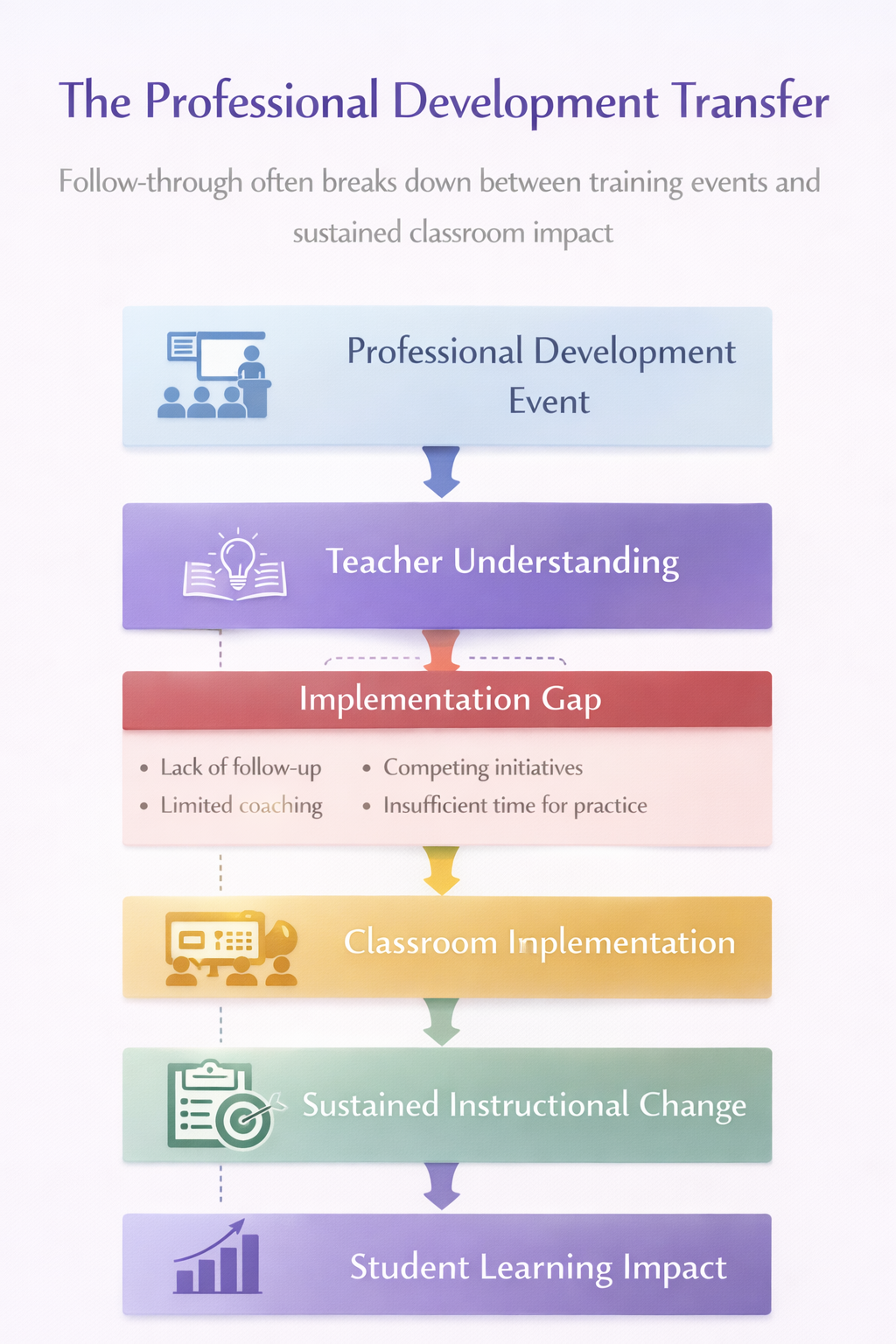
Professional learning creates potential for change, but sustained improvement requires structures that support implementation over time.
Where Transfer Breaks Down
Professional development often succeeds at introducing new ideas. Teachers gain awareness of strategies, explore instructional frameworks, and reflect on their current practice. However, translating those ideas into daily instruction requires additional conditions that are not always present.
Competing initiatives, limited time for practice, lack of instructional coaching, and misalignment with existing curriculum structures can all make implementation difficult. Even highly motivated educators may struggle to sustain changes when the surrounding system does not reinforce the new approach.
Why It Matters
When professional development does not translate into classroom practice, districts can experience initiative fatigue. Teachers attend workshops and trainings, but the connection between professional learning and student outcomes becomes difficult to see.
By contrast, when systems support professional development transfer, educators are able to experiment, refine, and integrate new strategies into their teaching over time. The focus shifts from one-time events to sustained instructional improvement.
Conditions That Support Transfer
Aligned Systems
Professional learning is most effective when it connects directly to curriculum, assessment, and instructional priorities within the district.
Opportunities for Practice
Educators need time to experiment with new approaches, reflect on results, and refine their implementation.
Instructional Support
Coaching, collaborative inquiry, and peer feedback help translate new ideas into classroom routines.
Sustained Focus
Improvement efforts are more likely to succeed when districts maintain consistent priorities rather than introducing frequent new initiatives.
Strengthening the Bridge Between Learning and Practice
Improving professional development transfer does not require more workshops. Instead, it requires systems that help educators integrate new ideas into daily instruction and continue refining their practice over time.
When professional learning is connected to classroom experimentation, collaborative reflection, and meaningful evidence of student learning, it becomes a catalyst for lasting improvement.
Work With Us
We work with districts seeking stronger systems for professional learning, instructional improvement, and sustained implementation.
Schedule a Conversation |
Explore Professional Learning Systems
Next Challenge: Data Overload in Schools →
Copyright © 2026 · All Rights Reserved · Limitless Learning Solutions